
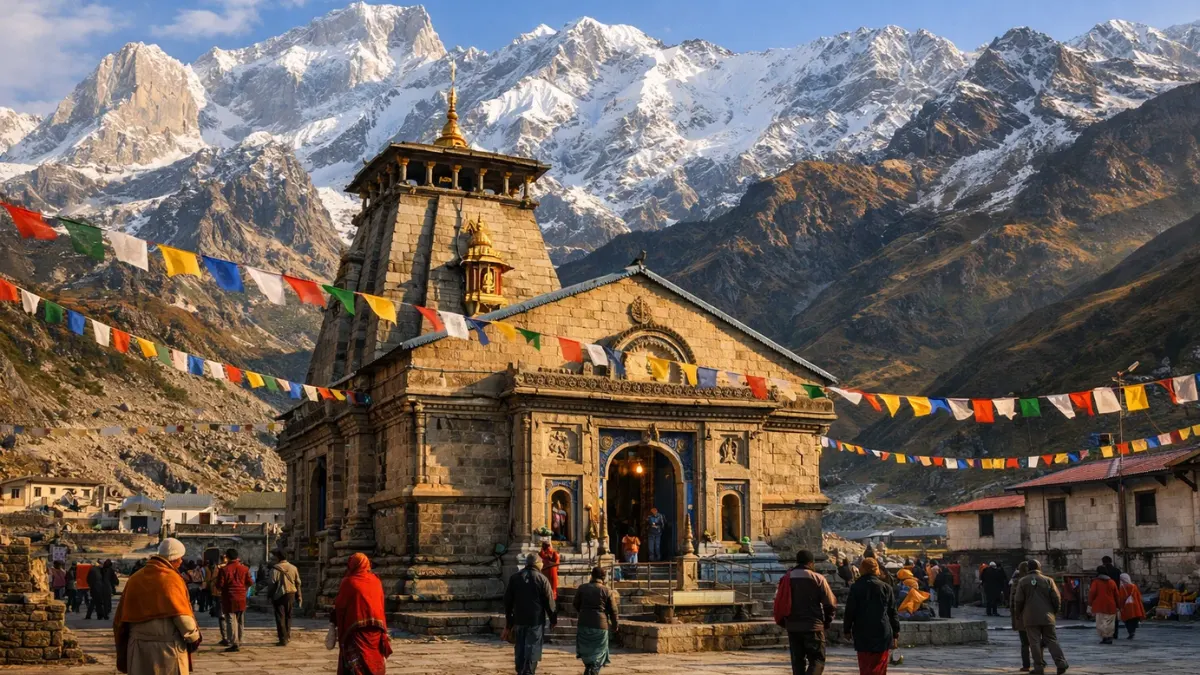
Kedarnath Temple : A Spiritual Landmark
The Kedarnath temple is the most respected temple in India. People travel long distances to pray here and spend a few quiet moments away from busy daily life. The temple is dedicated to Lord Shiva, one of the main deities in Hinduism.
Set deep in the Himalayan region, Kedarnath India is known for its cool air, wide mountain views, and calm surroundings. Pilgrims visit not only for worship but also for the sense of stillness that the place offers.
Many families today don’t want a tiring journey, you know. That is why options like Chardham Yatra by helicopter and Do Dham Yatra by Helicopter are becoming super popular. Less walking, less stress… more time to feel the spiritual vibe.
Local names and search terms (used naturally)
You may search sites using different terms. This article used common local phrases so you find the right info:
- kedarnath uttarakhand (region)
- kedarnath temple uttarakhand (state-specific)
- kedarnath dham mandir / kedarnath mandir (local names)
Each term points to the same shrine and nearby services.
Where Exactly is Kedarnath Temple?
The Kedarnath temple Uttarakhand stands in the Rudraprayag district of Uttarakhand. At about 3,583 meters (11,755 feet) above sea level, the temple sits in a landscape shaped by glaciers, rivers, and rocky slopes.
Because of this altitude, temperatures remain low even when much of India is warm.
When people speak about Kedarnath Uttarakhand, they usually remember the contrast — powerful mountains on one side and a quiet spiritual presence on the other.
A Town That Exists for a Temple
Unlike crowded urban centers, Kedarnath city is a small settlement built mainly for pilgrims. Life here follows the rhythm of the temple.
During the yatra season, the town slowly fills with movement:
- Groups of pilgrims arriving early in the morning
- Shopkeepers preparing tea in the cold air
- Bells ringing from nearby prayer spots
- Porters offering help to tired trekkers
Once winter begins than snowfall covers the paths and most residents temporarily move to lower areas. Silence returns that broken only by mountain winds.
Why This Temple is So Famous
The Kedarnath temple is one of the twelve Jyotirlingas of Lord Shiva.This place believed to carry deep spiritual importance.
Visitors often arrive with different hopes. Some pray for strength but others for clarity and many simply want a pause from fast-moving city life.
Interestingly, the surroundings themselves encourage stillness. With fewer distractions, people often find themselves slowing down without trying.
Mythology Behind Kedarnath Temple
1.The Pandava Legend
According to the Mahabharata:
- After the Kurukshetra war, the Pandavas sought Lord Shiva to absolve them of the sin of killing their relatives.
- Shiva avoided them and disguised himself as a bull (Nandi).
- When Bhima tried to catch him, the bull dived into the ground.
- The hump appeared in Kedarnath, while other body parts appeared in different places (now known as the Panch Kedar temples).
The unusual conical rock structure inside Kedarnath is worshipped as Shiva’s hump not a typical lingam shape.
2. Who Built the Temple?
- Believed to be originally built by the Pandavas.
- Later revived or reconstructed by Adi Shankaracharya in the 8th century.
. - The temple is made of massive interlocking stone slabs, with no cement.
3. The 2013 Flood Miracle
This is the most talked about modern mystery.
In June 2013:
- Massive floods and landslides devastated Kedarnath.
- Entire town was destroyed.
- Over 5,000 people died.
But the temple survived almost untouched.
The “Divine Rock” (Bhim Shila)
- A huge boulder rolled down during the floods.
- It stopped just behind the temple.
- It diverted the deadly water and debris flow around the temple.
The temple structure suffered minimal damage despite catastrophic destruction around it.
4. Architectural Enigma
- Built to withstand extreme weather for over 1,200 years.
- Survives heavy snowfall (buried in snow 6 months a year).
- No visible foundation in modern engineering terms.
- Designed to handle glacial conditions.
Modern studies suggest:
- It is built on a strong, stable rock base.
- Its north-south orientation reduces damage from glacial movement (unusual, as most temples face east).
5. The Winter Ritual Mystery
- During winter, the temple is closed due to heavy snow.
- The deity is moved to Ukhimath.
- Yet, locals believe a divine lamp continues burning inside the closed temple.
When reopened after 6 months, the lamp is said to still be burning — considered miraculous by devotees.
6. Adi Shankaracharya’s Samadhi
- Adi Shankaracharya is believed to have attained samadhi (left his body) near Kedarnath at age 32.
- His samadhi site is located behind the temple.
- His sudden disappearance remains spiritually mysterious.
7. Spiritual Energy & Location
Some researchers and spiritual practitioners believe:
- The temple is located on powerful cosmic energy lines.
- It aligns with other sacred Himalayan shrines.
- The region is considered a gateway between earthly and divine realms.
These claims are spiritual rather than scientifically proven.
Why Kedarnath Feels Mysterious
It combines:
- Ancient mythology
- Harsh Himalayan geography
- Survival against extreme disasters
- Unclear construction techniques
- Deep spiritual significance
Whether viewed scientifically or spiritually, Kedarnath remains one of India’s most awe-inspiring and mysterious temples.
Nature: The True Architect of Kedarnath Temple
The Kedarnath temple Uttarakhand is made from massive grey stones placed carefully to withstand harsh weather.
A few details often catch visitors’ attention:
- Thick walls that handle freezing temperatures
- A raised base that adds protection
- Minimal decoration that keeps focus on worship
- Nandi, the sacred bull, seated before the entrance
There is nothing flashy about the structure yet it leaves a lasting impression.
Sometimes strength speaks quietly.
Trekking Route to Kedarnath Temple
Reaching the shrine usually involves the Kedarnath trek, beginning at Gaurikund.
Quick facts:
- Distance: roughly 16–18 km
- Average time: 6–8 hours
- Difficulty: moderate but steady
The trail shifts constantly — one moment beside a river, another along a steep climb, then through mist-covered stretches.
Kedarnath trekking is rarely about speed. People walk at their own pace, stopping for breath, tea, or simply to look around.
The first glimpse of the temple often arrives without warning — and many travelers fall silent.
Travel Options for Those Who Cannot Trek
For those unable to complete the trek, other choices exist:
- Pony rides
- Palkis carried by trained teams
- Helicopter services
These options open the journey to older travelers, families with young children, and those with health concerns.
Faith, after all, should remain reachable.
Right Time for Kedarnath Temple Yatra
Because winters are severe, Kedarnath India welcomes visitors only for part of the year.
Most comfortable months:
- May to June
- September to October
Monsoon weeks (July–August) can bring heavy rain and landslides, making travel unpredictable.
When winter approaches, the temple closes, and the idol is moved to another location until spring returns.
The mountains decide the schedule here.
The shrine is seasonal as the kedarnath opening date usually falls in late April or early May and the kedarnath closing date happens in late October or early November as these dates are set each year by the Shri Badrinath–Kedarnath Temple Committee (BKTC). Always check BKTC’s official notice before you plan.
Where to stay — options near the shrine and at base towns
Accommodations close to the shrine are basic. For clarity, the kedarnath temple kedarnath uttarakhand area offers:
- GMVN tents and cottages (official, low-cost; book via GMVN online).
- Private guest houses and seasonal tent camps in Kedarnath village and Gaurikund.
- Better hotels in nearby towns (Guptkashi, Rudraprayag, Joshimath) if you want more comfort before the high-altitude stretch.
Booking tip: print confirmations and carry ID — checkpoints often ask for them.
Costs and quick compare table
People often ask what a trip costs. This rough table helps set expectations for the kedarnath temple india visit.
|
Item |
Typical cost / notes |
|
GMVN dorm/tent |
₹250–₹800 per bed (seasonal) |
|
Private room |
₹800–₹3000+ per night |
|
Helicopter shuttle |
Varies; book via IRCTC Heli Yatra |
|
Porter / pony |
Pay locally; depends on distance and load |
Prices rise during peak season; book early.
Food, medical help and basic facilities near the shrine
- Meals are simple vegetarian: dal, roti, rice and local dishes.
- Hot water is limited early and late in season.
- Medical tents and stretcher/evac teams are active during yatra season. Carry basic medicines and altitude care items.
Rules, puja, and darshan procedures
- The BKTC runs temple timings and pujas; follow their instructions.
- Photography inside the mandir is restricted.
- For special pujas, ask BKTC or authorized local priests for booking options.
Practical packing list for a Kaedarnath visit
- Warm layers and a windproof jacket.
- Good trekking shoes and a sleeping liner.
- Basic first-aid, medicines, and hydration salts.
- Cash in small notes and ID prints.
- Power bank and offline maps.
The Landscape You Don’t Forget Easily
The region around Kedarnath India leaves strong visual memories:
- Peaks that hold snow even in warmer months
- Valleys that shift color with the seasons
- Rivers moving with steady force
- Air that feels noticeably cleaner
Away from traffic and noise, many visitors notice how quickly their senses adjust to the quiet.
For younger travelers especially, the setting often feels larger than anything they have seen before.
More Than a Destination
A trip to Kedarnath is not just about reaching a destination. It is about faith, family time, and inner peace. Whether you walk the kedarnath trek or choose the easy path with Do Dham Yatra by helicopter, the experience will stay in your heart forever.
The beauty of kedarnath india, the strength of the ancient temple, and the blessing of Lord Shiva make this journey truly special. If you want maximum comfort and less physical stress, you can also plan a full CharDham Yatra by helicopter for a smooth spiritual adventure.
