
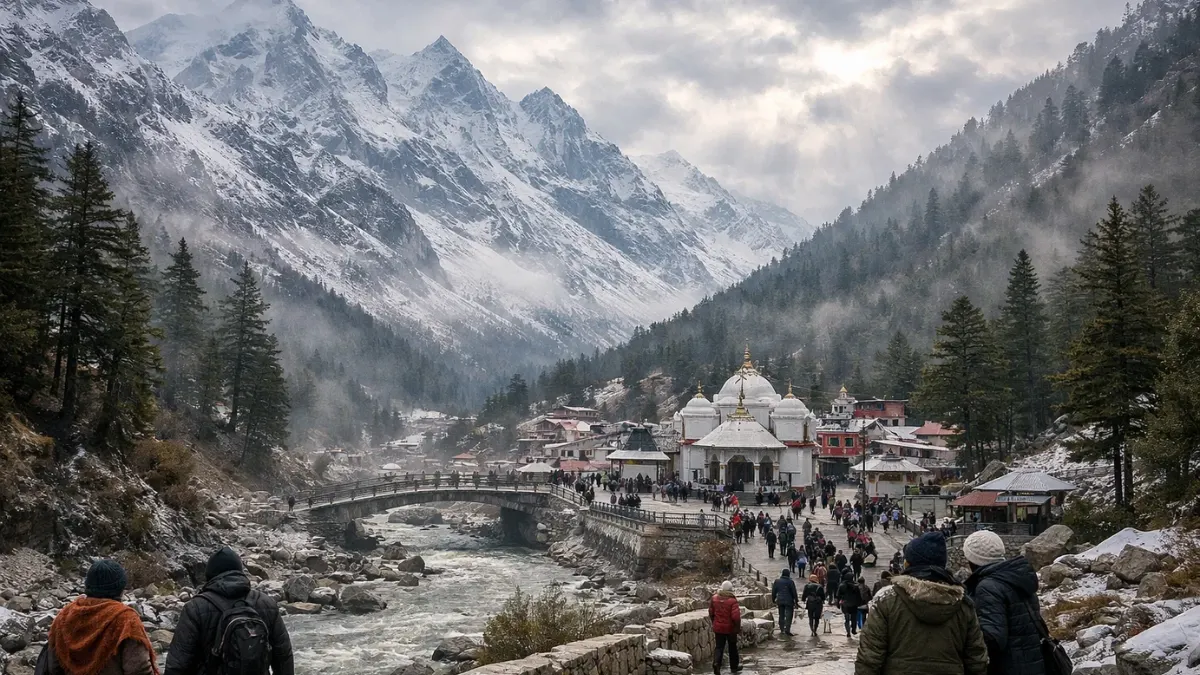
Weather in Gangotri is the first thing you should wrap your head around before locking any travel plan whether you’re coming by road, on foot or opting for the increasingly popular Char Dham Yatra by helicopter and up here in the high Himalayas as the weather doesn’t follow polite rules; it changes its mind fast and a calm sunlit morning can turn sharp and windy by afternoon and by evening you’re grateful for every warm layer you packed as knowing what to expect, when to go and how to pack isn’t just helpful—it can make or break your Gangotri experience where from chilly summer nights to sudden monsoon showers and snow that lingers longer than you’d guess understanding the weather in Gangotri helps you plan smarter, travel safer and actually enjoy the journey instead of fighting the cold.
Weather in Gangotri: Where Is Gangotri and How Cold Are We Really Talking?
Gangotri is a small pilgrimage town in Uttarkashi district, Uttarakhand perched in the high Himalaya which depends on which source you check the temple town sits roughly between 3,100 and 3,400 metres above sea level —take “about three thousand metres up” as a safe shorthand as that elevation is why the weather acts like it’s auditioning for a drama series.
Yamunotri by the way is slightly higher in places and tends to feel a touch crisper at night when you plan a Char Dham route so remember that subtle difference.
Weather in Gangotri Through the Seasons: A Quick, Useful Overview
- Spring to early summer (April–June): The best window for most visitors as days are pleasantly cool, nights are cold and roads are usually open so think clear skies, dramatic light and that “I’m alive” kind of cold.
- Monsoon (July–September): Expect rain and possible landslides as the valley gets green and theatrical but travel can be risky — roads can be unreliable.
- Autumn (mid-September–October/November): Another great window — crisp, clear and photogenic so temple opening/closing dates are tied to festivals; typically the shrine opens in spring (Akshaya Tritiya) and closes around Bhai Dooj in autumn. If you want darshan and fewer crowds as this is gold.
- Winter (November–April): Harsh, snowbound, and mostly inaccessible. Roads are usually closed and the temple closes for the season. Do not try to “wing it” unless you’re outfitted like a Himalayan marmot.
Weather in Gangotri Temperatures: A Few Numbers and a Reality Check
Numbers are helpful but blunt. Here’s a realistic map:
- Summer daytime (May–June): mean highs around 10–20°C in the lower parts of the valley — pleasantly cool; nights often dip to near freezing. Some data models show daytime maxima tending toward the mid-teens on average.
- Monsoon months: daytime temps moderate (often 10–16°C), but humidity and wet conditions make it feel colder at times.
- Winter: temperatures fall well below freezing at night; daytime temps are still bitter and snow is common. Weather history shows nights can sink to -5°C or lower and heavy snowfall is typical. In short: pack for real winter if you’re there between November and April — but you probably shouldn’t be there then unless you love frostbite metaphors.
(Yes, models and websites disagree slightly — that’s normal. Mountains are opinionated.)
Typical Weather in Gangotri Patterns You’ll Actually Care About
- Sun in the morning, drama by afternoon. The Himalaya loves swift mood swings. Clear, glittering mornings can turn cloudy post-noon and bring rain or snow, depending on the season. This is why early starts are a pilgrim’s secret weapon.
- Cold nights. Even when the sun plays nice, the nights bite. Thermal layers are your friend. I mean it. Wear them. Carry them. Befriend a spare sweater.
- Monsoon unpredictability. July–September brings the monsoon. Green, dramatic terraces — yes. Risk of landslides and road blocks — also yes. If you’re doing weather in Yamunotri and Gangotri comparisons, know they both feel the monsoon’s patience-testing moods.
- Windy, thin air. It’s not windy for long stretches, but when the wind comes, it’s an in-your-face, cold, slap-you-pretty wind. Thin air means sunburn happens faster than you expect — high-altitude sun is sneaky. SPF, hat, sunglasses. Don’t be that person who thought “I’ll be fine.” You won’t. (Maybe you will but — why risk it?)
Best Time to Visit Based on Weather in Gangotri (And Why It Matters)
If you want a short answer: April–June and mid-September–October. These months give you open roads, moderate temperatures, and the sort of crisp skies that make glaciers look cinematic. Uttarakhand tourism and local admin pages list these as the preferred windows for pilgrims and trekkers alike.
Why not July–August? Because the monsoon can be dramatic — in a landslide-y sort of way — and November–March? Snow closes the show.
Packing list that won’t leave you shivering at tea time
- Layers: base, fleece, light down or insulated jacket, windproof shell. Layers are the mountain’s vocabulary.
- Sturdy shoes: waterproof trekking shoes or boots. The paths can be slippery and, frankly, bossy.
- Sun protection: sunglasses (polarized if possible), lip balm, high SPF sunscreen.
- Warm accessories: wool hat, gloves, warm socks. Trust me.
- Rain protection if visiting in monsoon months: packable rain jacket and dry bags for electronics.
- Medicines and essentials: altitude can play tricks — headache, nausea — bring basic meds, rehydration salts, and any personal prescriptions.
Weather in Gangotri and Altitude: Health Tips You Shouldn’t Ignore
Altitude matters as Gangotri is high enough that some people feel mild altitude effects: headaches, tiredness and shortness of breath so move slowly, hydrate and don’t climb to Gaumukh or higher on day one if you’re coming from the plains so if you have cardiac or respiratory issues talk to a doctor before traveling. (This is not a drill.)
Comparing — quick: weather in Yamunotri and Gangotri
Both are high-altitude, both are pilgrimage staples and both wear snow like a crown in winter as Yamunotri sits slightly higher and can feel a touch harsher especially at night so if you’re doing the circuit, treat both as cold and fragile ecosystems — dress warmly, be weather-aware and don’t be cavalier about road warnings.
Weather in Gangotri: Final Thoughts From the Mountains
Weather in Gangotri has this way of putting even the best-laid plans in check and that’s kinda its charm so you don’t outsmart these mountains—you tune in, layer up and go at their speed so whether you roll up after a bumpy road haul or take the easy Char Dham Yatra by helicopter getting the weather in Gangotri lets you ditch the gripes and zero in on why you’re there as pack smart with extras, brace for flips and remember the mountains call the shots. Do it right and Gangotri hits you with more than sights or darshan—it’s that deep calm from crisp air, quiet and those massive peaks.
