
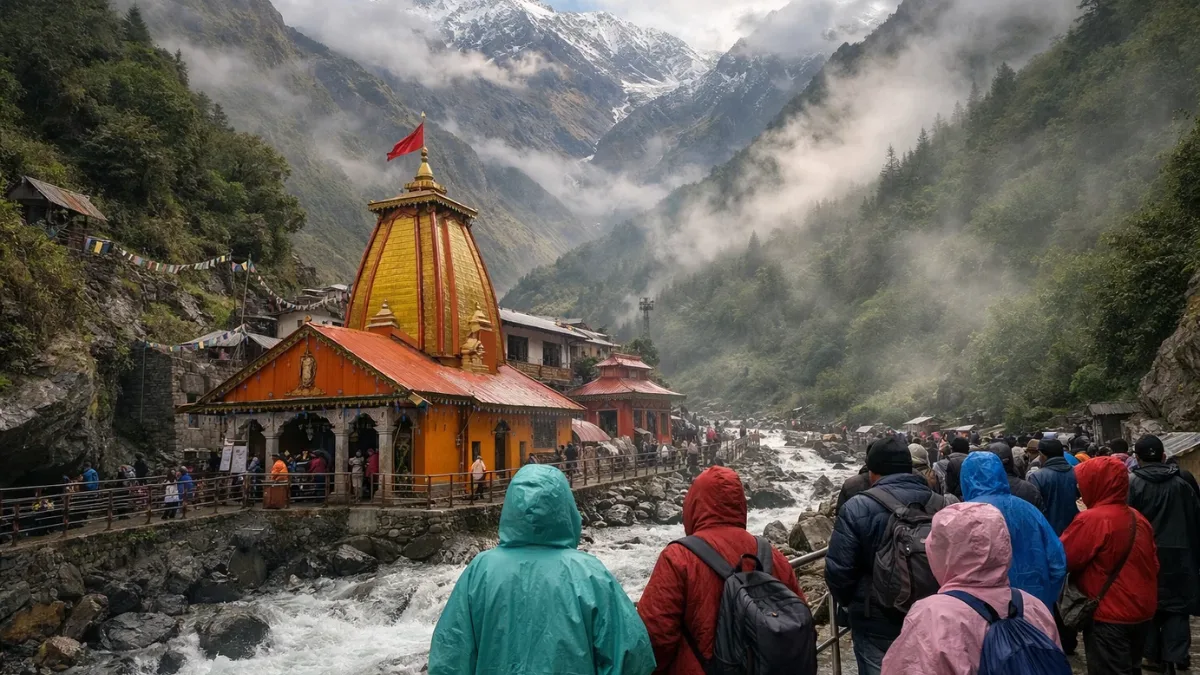
Weather in Yamunotri is the first thing you should understand before planning your trip because everything here depends on the sky, the cold and the sudden mountain changes as this simple guide explains the weather in Yamunotri in a clear and honest way using real facts that help you plan better, pack right and stay safe so whether you plan a normal pilgrimage on foot or a smooth Chardham Yatra by helicopter knowing how the weather behaves will save you from stress, delays and health trouble as this section gives you live-weather awareness, ground reality and travel-ready tips in plain words just like one traveler explaining it to another.
Quick snapshot — what the weather in Yamunotri feels like
The weather in Yamunotri stays cold most of the year because the shrine sits around 3,293 metres above sea level as that thin air makes nights sharp and storms quick so expect warm sun in the day during summer and bone-cold nights in winter.
Month-by-month table for the weather in Yamunotri
This table gives a clear view of the weather in Yamunotri through the year. Use it to pick clothes, dates, and the best windows for yamunotri sightseeing.
| Months | Typical weather in Yamunotri | What to expect | Travel note |
| Jan–Apr | Very cold, heavy snow at times | Deep freeze, trail closed in winter months | Temple stays closed for winter; roads may block. |
| May–Jun | Mild days, cold nights | Most pilgrims arrive; snow melts on trail | Best time to visit for clear weather and safe trekking. |
| Jul–Aug | Monsoon rains, slippery trails | Landslip and road risk; wet trail sections | Avoid if you dislike rain; check local alerts. |
| Sep–Oct | Cool and clear | Great skies, stable trail conditions | Another top window for yamunotri sightseeing. |
| Nov–Dec | Cold returns, first snows | Temple closes as snow builds | Travel becomes hard; check official dates. |
Why altitude changes the weather in Yamunotri
The weather in Yamunotri depends on height. At 3,293 metres you lose warmth quickly after sunset. That makes the sun feel strong but the temperature drop fast. Storms from western disturbances can bring sudden snow or rain so when you plan your trip assume the weather in Yamunotri will change during the day.
Best time to visit and when the temple opens
If you ask “what is the best time to visit Yamunotri” aim for late May to early June or September to October as these windows give good weather in Yamunotri for trekking and darshan as the temple usually opens in spring around April or May (dates vary by year) and it closes again in late autumn when snow returns so always confirm the exact temple opening date before you go.
Live forecasts and official warnings — where to check
For current weather in Yamunotri conditions, trust the India Meteorological Department (IMD) city pages as IMD posts daily and 7-day outlooks for Yamunotri that show temperature, cloud cover and warnings. Check IMD before you leave and while you travel. If IMD posts an orange or red alert for the area, change your plans.
Month details — short plain notes (so you decide fast)
- May–June: The weather in Yamunotri warms. Days feel nice and many pilgrims come. Pack layers and a warm jacket for night.
- July–August: The weather in Yamunotri gets wet. Heavy rain and landslides can close roads. Local travel firms often pause treks. Avoid unless you have firm local guidance.
- September–October: The weather in Yamunotri clears after monsoon. This is a calm, scenic time for yamunotri sightseeing.
- November–April: The weather in Yamunotri becomes snowy and severe. The route closes in deep winter. Do not plan normal pilgrim travel now.
Road and trek safety tied to the weather in Yamunotri
When the weather in Yamunotri brings rain or snow, roads and trails can become dangerous fast as landslides and avalanches happen in heavy weather so if local disaster teams or IMD issue a warning for Uttarkashi district, treat it seriously and delay travel where for rescue or emergency info, use district contacts and local police.
Pack list for the changing weather in Yamunotri
Prepare for cold and for wet. The weather in Yamunotri will test thin gear.
Must-haves:
- Thermal base layers and a down jacket.
- Waterproof shell and pants for rain or wet snow.
- Sturdy trekking boots with good grip and gaiters.
- Warm hat, gloves, wool socks and sunglasses.
- Small first-aid kit, water purifier tablets, and personal medicines.
If you plan on yamunotri sightseeing add a spare pair of shoes and quick-dry clothes.
Health tips for high altitude and the weather in Yamunotri
The weather in Yamunotri and the altitude can make you breathless or give you headaches so climb slowly and drink water and if you get severe headache, nausea or confusion descend right away so talk to your doctor about altitude medicine if you have heart or lung issues.
Quick FAQ table — instant answers on the weather in Yamunotri
| Question | Quick answer |
| What is the current weather in Yamunotri? | Check the IMD Yamunotri city page for live updates. |
| Is June safe for trekking? | Yes. June gives good weather in Yamunotri for treks and darshan. |
| Can I do Yamunotri in monsoon? | Monsoon brings heavy rain and landslide risk for the weather in Yamunotri. Travel only with local clearance. |
| When does the temple open? | The temple opens in spring; exact dates change yearly, so check official updates before you go. |
| Where are good places to visit near Yamunotri? | Kharsali, Janki Chatti, and Hanuman Chatti are common stops for pilgrims and add to yamunotri sightseeing. Plan these on clear weather days. |
Places to visit near Yamunotri that fit the weather
When the weather in Yamunotri cooperates, people combine darshan with short side trips where for easy add-ons, consider Kharsali village for its winter seat of the goddess, small high-altitude meadows and nearby springs as those short side trips work best in May–June or September–October when the weather in Yamunotri stays stable.
Climate change — how long-term shifts affect the weather in Yamunotri
Researchers and local reports show glaciers that feed Char Dham towns are shrinking so that change makes the weather in Yamunotri more erratic, with sudden floods, flash events and less predictable snowfall so plan with extra caution because climate shifts may bring stronger storms in short windows.
Smart travel checklist tied to the weather in Yamunotri
- Check IMD’s Yamunotri forecast 24 hours before travel.
- Start early in the day; weather in Yamunotri often worsens after noon.
- Carry cash and a power bank; heavy weather can cut connectivity.
- Hire a local guide for the trek. Guides know micro-weather on the route and help with yamunotri sightseeing plans.
- Have an alternate plan to descend if the weather turns bad.
Final short note — respect the mountain weather in Yamunotri
Weather in Yamunotri is not something you can take lightly, because the mountains decide the pace not the traveler so when you respect the weather in Yamunotri, you travel safer, feel calmer and enjoy the journey more whether you walk the trail or choose a smooth Chardham Yatra by helicopter so always check the forecast, listen to local advice and keep backup plans ready because the weather can change without warning so if you plan with patience and awareness as the weather in Yamunotri becomes part of the experience, not a problem and your pilgrimage stays peaceful from start to finish.
